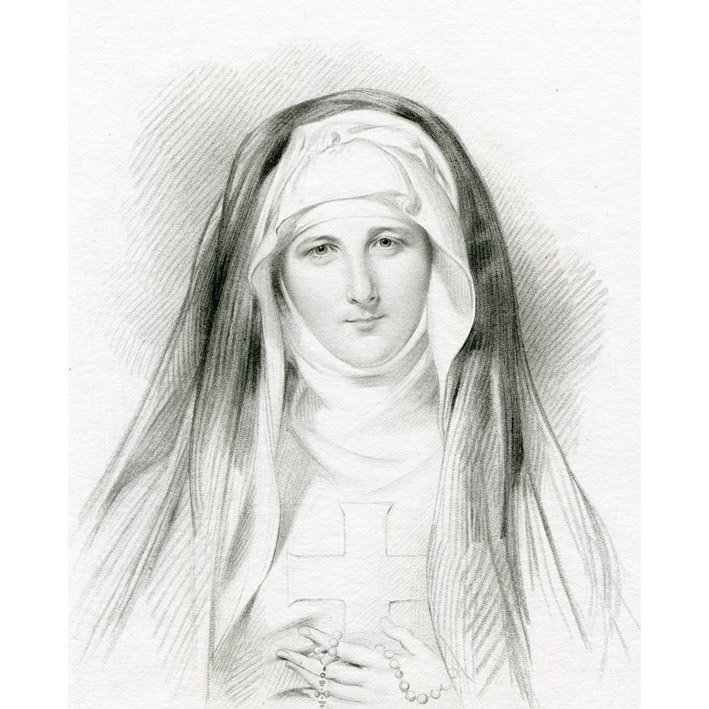
Before Sir Walter Scott captivated the literary world with tales of chivalry and history, a trailblazing woman named Jane Porter quietly, yet powerfully, laid the groundwork for an entirely new genre. She didn't just write novels; she engineered what she boldly proclaimed a "new species" of writing, a pioneering blend of factual political and martial events with the deeply human elements of romance. This isn't just about chronology; it’s about understanding a foundational shift in how history was told, felt, and consumed. Diving into Jane Porter's Literary Origins & Evolution reveals not just a forgotten giant, but the very DNA of historical fiction as we know it today.
At a Glance: Jane Porter's Enduring Legacy
- Pioneering Spirit: Jane Porter was among the first to intentionally combine rigorous historical events with fictional narrative elements, predating Sir Walter Scott.
- "New Species" Claim: She saw her work as an innovative form, fusing documented history with the emotional depth of the novel.
- Bestselling Masterpieces: Her novels, Thaddeus of Warsaw (1803) and The Scottish Chiefs (1810), achieved widespread popularity and critical acclaim, frequently reprinted across Great Britain and America.
- Distinctive Vision: Porter's approach intertwined romance, sentimentalism, gothic elements, and evangelical moralism, offering a unique perspective on historical events, distinct from later authors like Scott.
- Cultural Impact: Her works significantly influenced popular taste, demonstrating a strong preference for her narratives over contemporaries in some regions, and shaping the early 19th-century literary landscape.
- Reclaiming Her Place: Modern criticism increasingly acknowledges Porter's innovative contributions and her rightful place as a key figure in the development of historical fiction.
The Audacious Claim: Forging a "New Species" of Storytelling
Imagine a literary landscape where history was largely confined to dry chronicles and biographies, and novels were often seen as mere diversions of sentiment or gothic thrills. Into this world stepped Jane Porter, with an ambitious vision that would irrevocably alter the course of literature. She didn't just write about history; she brought it to life, arguing that she was creating a "new species" of writing. This wasn't a humble suggestion; it was a profound declaration that history and fiction, once largely separate entities, could not only coexist but thrive together, enriching each other in a symbiotic relationship.
Porter's innovation lay in her meticulous research into factual events, which she then infused with compelling fictional characters and dramatic narratives. Her goal was not just to inform, but to move, to inspire, and to make the past resonate with the present. This was a bold move at a time when the novel was still finding its footing as a respectable art form, and history was typically reserved for academic or political discourse. Her work offered readers a vivid, immersive experience of historical periods, allowing them to witness grand events through the eyes of relatable, often emotionally complex, individuals.
Thaddeus of Warsaw: A Refugee's Heartbeat in History
In 1803, years before Scott's Waverley, Porter published Thaddeus of Warsaw, a novel that instantly captured the public imagination. It was a fictionalized account of a refugee from the 1790s occupation of Poland, a timely and poignant subject given the turbulent political climate of early 19th-century Europe. The novel follows its eponymous hero, a Polish nobleman, as he grapples with displacement, loss, and the struggle to rebuild his life amidst foreign shores.
Porter masterfully wove together the harsh realities of political upheaval with intensely personal drama. Thaddeus, a sentimental hero, embodies the nobility of a fallen nation, his struggles reflecting the broader tragedy of Poland. The novel explored themes of patriotism, resilience, and the search for identity in exile, resonating deeply with a populace acutely aware of Napoleonic expansion and the precariousness of national sovereignty. Her narrative brought the distant suffering of a nation into the drawing rooms of Britain, transforming political events into a deeply empathetic human story.
The Scottish Chiefs: Epic Heroes and Enduring Patriotism
Perhaps Porter's most famous work, The Scottish Chiefs (1810), solidified her reputation as a groundbreaking historical novelist. This monumental five-volume novel plunged readers into the heart of the Scottish Wars of Independence, dramatizing the heroic exploits of figures like William Wallace and Robert the Bruce. But Porter didn't just retell history; she reimagined it with a powerful romantic sensibility. She introduced fictional warriors, celebrated the pluck of young women, and painted villains with broad, dramatic strokes.
The novel’s impact was immediate and widespread. It capitalized on the contemporary vogue for Highland tourism, drawing on the sublime and picturesque scenery of Scotland to create a vivid backdrop for its epic narrative. Readers were transported to ancient castles, windswept battlefields, and rugged mountains, all infused with a sense of historical grandeur and romantic destiny. The character of Lady Helen Mar, in particular, offered a compelling female perspective amidst the martial exploits, showcasing her resilience and moral strength. Explore Jane Porters character to understand the depth and complexity she brought to her creations.
The enduring popularity of The Scottish Chiefs is underscored by remarkable library records. At Westerkirk Library, for instance, the novel was borrowed over 160 times between 1813 and 1816, making it the most borrowed novel and the second most popular holding overall for that period. Tellingly, the library reportedly avoided adding Walter Scott's Waverley (1814) until the mid-1820s, a testament to the strong and sustained preference for Porter's work in that community. This isn't just a fascinating anecdote; it's tangible proof that Porter's vision of historical romance held significant sway over the reading public well into the era often dominated by Scott's narratives.
Weaving History with Heart: Porter's Genre Tapestry
What made Porter's "new species" so compelling was her skillful integration of diverse literary traditions. Her novels were far from singular in their stylistic approach; they were rich tapestries woven from gothic romance, sentimentalism, evangelical moralism, and the ballad tradition.
- Gothic Romance: Elements of the gothic, with its dramatic settings, heightened emotions, and often perilous situations, lent an air of thrilling suspense to her historical narratives. Ancient castles, secret passages, and the constant threat of danger added a layer of excitement that transcended mere historical recounting.
- Sentimentalism: Porter understood the power of emotion. Her heroes and heroines often displayed profound feeling, their sorrows and joys rendered with a sensitivity that appealed directly to the reader's heart. This sentimentalism allowed for a deeper connection to the characters' personal struggles against historical backdrops.
- Evangelical Moralism: Beneath the layers of romance and history, Porter's novels often carried a strong evangelical message. While Wallace's pursuit of "Liberty" in The Scottish Chiefs might have appeared rebellious, it was ultimately framed within a moral compass that sought true freedom and contentment not in earthly victory, but in Heaven. This provided a spiritual dimension to her historical narratives, imbuing them with deeper meaning and purpose, aligning patriotic struggle with divine providence. This moral framework also resonated with anti-Napoleonic rhetoric in wartime Britain, where national struggle was often framed in terms of righteous defense against tyranny. Napoleon, notably, proscribed its French translation, highlighting the novel's potent political undertones.
- Ballad Tradition: Drawing on the oral tradition of ballads, Porter infused her prose with a lyrical quality and a focus on heroic deeds and tragic fates. This connection to a venerable form of storytelling added an authentic, folkloric resonance to her historical figures, making them feel like legends passed down through generations.
This masterful blending of genres allowed Porter to create narratives that were not only historically informed but also emotionally resonant, morally instructive, and dramatically engaging.
Beyond Waverley: A Distinct Vision of History
It's easy, in retrospect, to view Jane Porter's work solely through the lens of Sir Walter Scott, often positioning her as a precursor. However, to do so is to miss the distinct intellectual and artistic vision that underpinned her historical fiction. Porter's vision of history as romance was profoundly different from the Humean skepticism that would later characterize Scott's Waverley novels.
Scott, influenced by Enlightenment philosophy, often presented history with a degree of detachment, exploring the complexities of human motivation and the sometimes-ambiguous nature of historical events. His characters frequently found themselves caught between opposing forces, their loyalties tested, and their actions driven by a blend of self-interest and idealism. There was an intellectual distance that allowed for nuanced exploration of historical forces.
Porter, on the other hand, embraced history with a fervent romanticism and a clear moral conviction. Her historical figures, particularly in The Scottish Chiefs, were often depicted as embodiments of clear virtues or vices. William Wallace, for example, is the unadulterated patriot, his pursuit of "Liberty" a pure, righteous crusade. While his tragic fate serves a higher evangelical purpose – suggesting that ultimate freedom is found in Heaven – it does so without compromising the moral clarity of his earthly struggle. This approach resonated deeply in a wartime Britain that needed clear heroes and villains, and a moral framework for its own conflicts. It’s no wonder Napoleon himself saw the danger in its message and banned its translation in France.
This difference isn't about one being "better" than the other, but about two distinct approaches to historical narrative. Porter offered an empowering, morally clear, and emotionally charged version of history that directly engaged with contemporary anxieties and aspirations. Her heroes were not conflicted by shades of grey, but shone with the light of unambiguous virtue, offering inspiration and solace. This conviction in her narrative, and the strong moral imperative embedded within it, is a hallmark of her unique contribution to the genre.
Why Porter Still Matters: Reclaiming a Literary Pioneer
For too long, Jane Porter's extraordinary contributions were overshadowed, her name often mentioned only in passing as a footnote to more celebrated male contemporaries. Yet, her legacy is undeniable and increasingly receiving the critical sympathy and attention it deserves. Her bestselling novels achieved genuine "literary classic" status during her lifetime and beyond, undergoing frequent reprints for decades in both Great Britain and America. This sustained popularity speaks volumes about their quality and their resonance with multiple generations of readers.
Porter’s work didn’t just entertain; it educated, inspired, and shaped the public's understanding of history. By weaving together the grandeur of historical events with the intimacy of personal stories, she made history accessible and emotionally engaging in a way few had done before. She demonstrated that novels could be more than just escapist entertainment; they could be powerful vehicles for exploring national identity, moral fortitude, and the human spirit's resilience in the face of adversity. Explore Jane Porters character to truly appreciate how she embodied this innovative spirit in her own life and writing.
Modern scholarship is now actively reclaiming Porter's place as a pivotal figure in literary history. Her audacious claim of a "new species" is no longer dismissed as mere bravado but recognized as a genuine articulation of a groundbreaking literary project. Understanding Jane Porter's literary origins and evolution is crucial for anyone seeking a complete picture of the genesis of historical fiction, revealing a genre far richer and more diverse in its beginnings than often assumed. She wasn't just a precursor; she was a definer, a shaper, and an enduring voice whose influence echoes through centuries of historical storytelling.
Unpacking Porter's Enduring Appeal
What is it about Jane Porter's novels that allowed them to achieve such rapid and lasting success, even outperforming her more famous contemporaries in certain circles? It boils down to a masterful interplay of emotional depth, moral clarity, and a keen understanding of her audience's desires.
Porter understood that history, while important, often needed a human face, a personal stake, to truly captivate. She didn't just list facts; she dramatized them, creating scenarios where readers could viscerally feel the urgency of a battle, the heartbreak of exile, or the triumph of a moral stand. Her characters, whether historical figures like Wallace or fictional additions, were imbued with a strong sense of purpose and often faced profound moral dilemmas, making their journeys deeply relatable.
Her blend of gothic thrill, sentimental connection, and clear moral message provided a satisfying reading experience that transcended mere entertainment. In an era marked by great political and social change, Porter offered narratives that affirmed virtues, celebrated patriotism, and ultimately pointed towards a higher moral order. This combination of thrilling adventure, heartfelt emotion, and clear-cut ethics resonated deeply with a broad readership seeking both escapism and meaningful engagement with the world around them.
The widespread availability of her works, their frequent reprints, and the avid borrowing habits observed in libraries like Westerkirk, underscore a fundamental truth: Jane Porter tapped into a powerful yearning for stories that felt both grandly historical and intimately human. Her narratives offered a compelling blend of education and emotional gratification, proving that history could indeed be both informative and incredibly moving. Her legacy is a testament to the power of a clear vision and a passionate commitment to storytelling. Understanding her origins helps us appreciate the full tapestry of historical fiction, acknowledging its complex and fascinating beginnings.